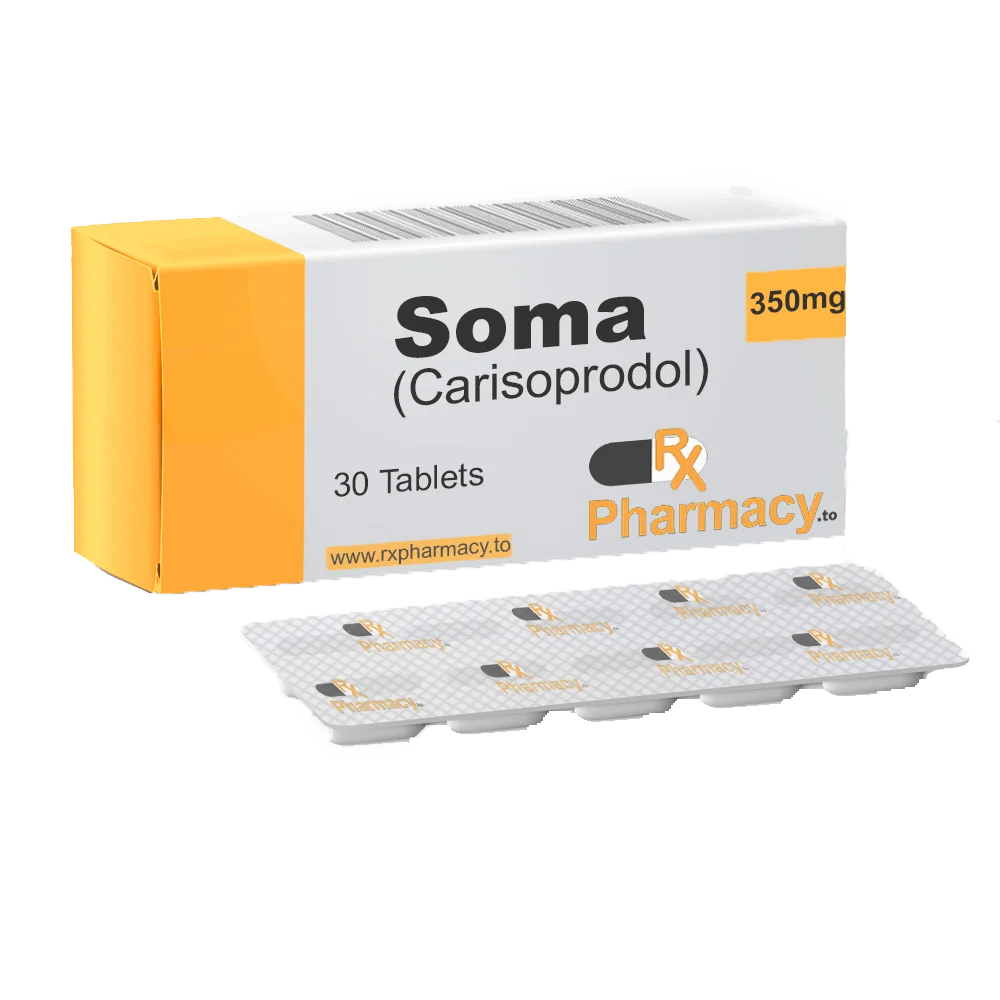
Pharmacological Profile: Carisoprodol (Soma) – This is being shipped directly from our US Domestic warehouse, arriving at your doorstep quickly and safely.
Overview and Mechanism of Action
Carisoprodol is a centrally acting skeletal muscle relaxant. Unlike neuromuscular blocking agents that act directly on the motor endplate, carisoprodol exerts its effects by altering interneuronal activity within the spinal cord and the descending reticular formation of the brain. Its primary metabolite, meprobamate, possesses significant anxiolytic and sedative properties. The drug’s efficacy is largely attributed to its modulation of the gamma-aminobutyric acid ($GABA_A$) receptor complex, where it acts as an indirect chloride channel modulator, enhancing inhibitory neurotransmission.
Clinical Applications
- Inhibition of Hypertonicity: Utilized for the short-term relief of acute, painful musculoskeletal conditions and muscle spasms.
- Neuromuscular Modulation: Works by disrupting the polysynaptic reflex arcs that contribute to muscle stiffness and contraction.
- Adjunctive Therapy: Typically indicated as part of a comprehensive regimen involving physical therapy and rest for musculoskeletal injury recovery.
Administration Protocols
- Bioavailability: Rapidly absorbed following oral administration; onset of clinical action typically occurs within 30 minutes.
- Dosing Constraints: Due to the risk of physical dependence and the accumulation of its metabolite (meprobamate), clinical guidelines generally restrict usage to short durations (two to three weeks).
- Metabolic Considerations: Undergoes extensive hepatic metabolism, primarily via the cytochrome P450 isoenzyme $CYP2C19$. Variations in patient genetics (e.g., “poor metabolizers” of $CYP2C19$) can lead to significantly higher plasma concentrations of the parent drug.
Adverse Reactions and Safety Profile
- Common Clinical Observations: Central nervous system (CNS) depression, leading to significant somnolence (drowsiness), vertigo, and cephalalgia.
- Secondary Observations: Tachycardia, postural hypotension, and gastrointestinal distress (nausea/vomiting).
- Neurological Risks: In rare instances, patients may experience idiosyncratic reactions such as extreme agitation, visual disturbances, or temporary ataxia (loss of muscle coordination).
- Potential for Dependence: Carisoprodol is classified as a controlled substance in many jurisdictions due to its potential for misuse and the withdrawal symptoms associated with abrupt cessation.